How to Check if a Solana Token Is Safe (2026)
How to check if a Solana token is safe before you buy: the 5 on-chain flags that separate a real token from a rug, and the 10-second way to verify any mint.
The 10-Second Version
You're about to buy a Solana token and there's really only one question that matters: can the creator take your money? The meme, the chart, the Telegram hype — all of it is noise until you've answered that. The good news is that on Solana the answer is fully on-chain, and checking it takes about ten seconds.
The fastest way: paste the mint address into a rug check tool and read the score. If you'd rather verify by hand — and you should know how — this guide walks the five checks that actually decide it, where each one lives on Solscan and DexScreener, and the red flags that should make you close the tab.
What "Safe" Actually Means
"Safe" is not about whether the price goes up. No tool predicts that, and anyone who tells you otherwise is selling something. It's narrower and more useful: can the creator rug you, and can holders always sell?
A Solana token is structurally safe when the creator has given up the powers that let them steal or trap your money, and the liquidity is locked so it can't be pulled. Five on-chain facts decide it:
| Check | What it answers | Safe value | Where to look |
|---|---|---|---|
| Mint authority | Can they print more supply? | Revoked / None | Solscan |
| Freeze authority | Can they freeze your wallet? | Revoked / None | Solscan |
| Liquidity lock | Can they pull the pool? | Locked / burned | DexScreener |
| Top-10 holders | Can a few wallets dump? | Under ~30% | Solscan |
| Metadata authority | Can they swap the logo/name? | Revoked / None | Solscan |
Get all five right and the worst rug vectors are off the table. Miss one and the token is one transaction away from zero.
The Fastest Check: Paste the Mint
Before doing anything by hand, run the token through a scanner. SolFoundry's Rug Check reads all five flags on-chain and returns a 0–100 trust score in a few seconds — no wallet, no signup.
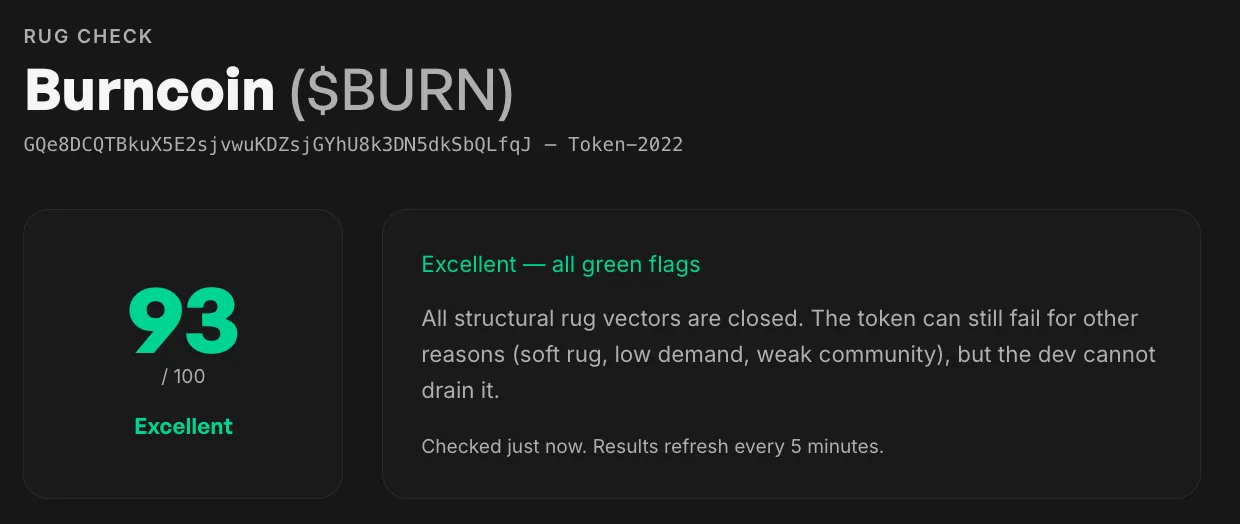
How to read the score: 85+ means all the structural checks pass — no mint or freeze authority, liquidity locked, holders reasonably spread. Below 60, at least one rug vector is live. The score is a fast filter, not a buy signal — it tells you the token can't be rugged in the obvious ways, not that it will go up.
The score is the filter. If it's low, you're done — move on. If it's high, it's worth understanding why, which is the rest of this guide.
Check It Yourself: The 5 Flags
1. Mint authority — can they print more?
Mint authority is the address allowed to create new tokens. If it's still active, the creator can mint unlimited supply and dilute every holder to nothing. On the token's Solscan page, the Mint Authority field must read None or show as revoked.
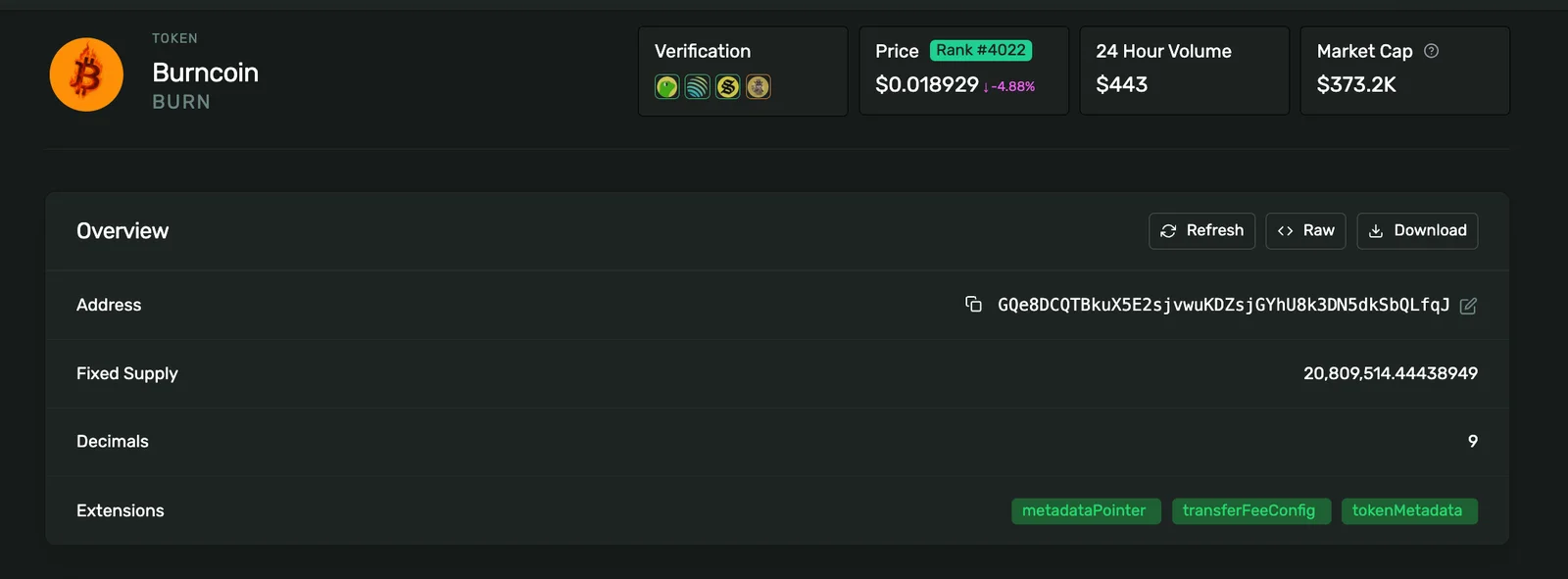
This is the single most important check. An active mint authority is a printing press pointed at your bag.
2. Freeze authority — can they lock your wallet?
Freeze authority lets an address freeze individual token accounts — meaning the creator can stop you from selling while they exit. Same Solscan card: Freeze Authority must say None. If it's active, you can be trapped holding a token you're not allowed to sell.
3. Liquidity lock — can they pull the pool?
Liquidity is the SOL paired with the token so people can trade. If it isn't locked, the creator can withdraw it, crash the price to zero, and walk. Open the token on DexScreener and look for the green padlock next to the liquidity figure — hover it to see the exact percentage locked or burned.
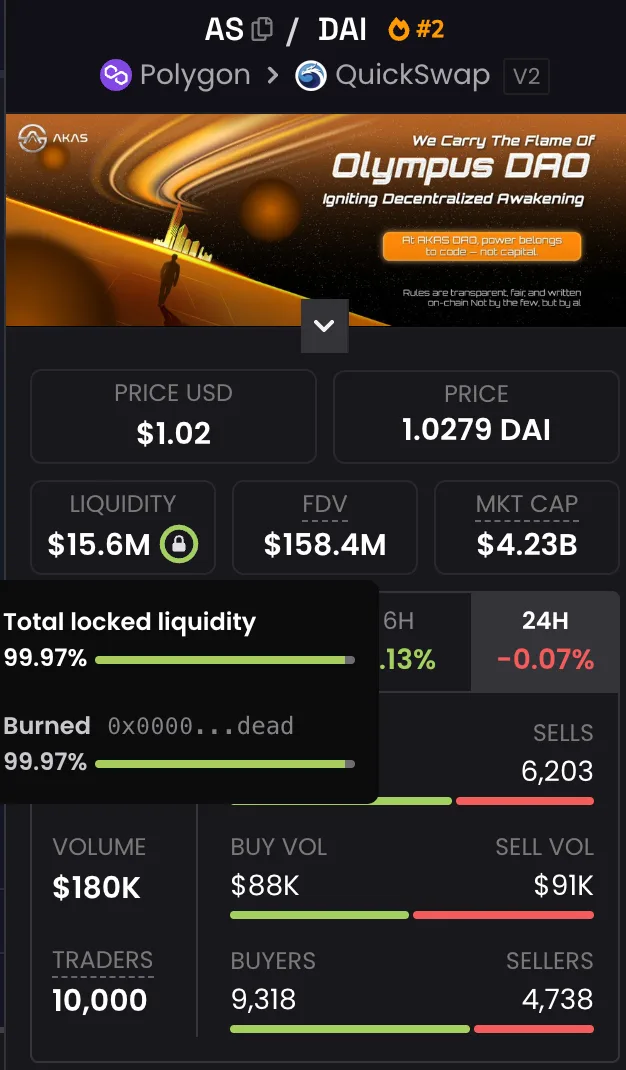
Anything under ~90% locked should be treated as effectively unlocked. And remember: a timelock is not a permanent lock — "locked for 30 days" is just a 30-day countdown to the exit.
4. Top-10 holders — can a few wallets crash it?
Open the Holders tab on Solscan. If the top 10 wallets hold more than ~30% of supply, a handful of coordinated sells can wipe the chart. Some concentration is normal early; a lot of it is a loaded gun. Watch for one wallet sitting on 10%+ that isn't the locked liquidity pool.
5. Metadata authority — can they rebrand the scam?
For Token-2022, check the metadata extension for updateAuthority: None. For classic SPL, check the Metaplex metadata account's update authority. If it's active, the creator can swap the image, name, and links after you buy — turning a clean-looking token into a phishing vehicle.
Check any token in 30 seconds.
Paste the mint address and get every safety check in this guide run on-chain automatically: authorities, LP lock, and holder concentration.
Run a Free Rug CheckRed Flags at a Glance
If you only remember one section, remember this table. Any single red flag is enough to walk.
| Red flag | What it means |
|---|---|
| Mint authority active | Creator can print infinite supply |
| Freeze authority active | Creator can freeze your wallet |
| Liquidity unlocked or under 90% | Creator can pull the pool |
| Timelock instead of permanent lock | Countdown to a "legal" rug |
| One non-pool wallet holding 10%+ | Single-wallet dump risk |
| Metadata authority active | Logo/name/links can be swapped post-buy |
Unlocked liquidity is the #1 killer. More Solana tokens die to a pulled pool than to any other vector combined. If you check nothing else, check the green lock on DexScreener — no lock, no buy, no matter how good the meme is.
What a Safety Check Doesn't Tell You
Being honest about the limits is the whole point of trusting a check at all. A structural safety score confirms the token can't be rugged in the mechanical ways above. It does not:
- Predict the price. A perfectly "safe" token can still bleed to zero on no demand.
- Catch insider wallet networks — twenty wallets that all belong to the founder look like twenty holders.
- Catch off-chain scams — a fake team, a stolen roadmap, a paid influencer dump.
For the deep end, combine your check with RugCheck and read the full rug-pull guide. Structural safety is the floor you never skip, not the ceiling.
Launching? Ship a Token That Passes
If you're on the other side of this — launching a token and wanting buyers to pass you in ten seconds — the fix is to make all five checks green at launch, atomically.
All five flags, one transaction. SolFoundry revokes mint, freeze, and metadata authorities and locks liquidity permanently in the same signed transaction as the launch — so your token scores 85+ the moment it's live, and buyers verifying you see a clean Solscan card instead of a kill switch.
Head to the launch flow to ship a token that clears every check by default. For the first 100 launches, the platform fee is zero — see the Early Supporter campaign.
FAQ
How do I check if a Solana token is safe? Paste the token's mint address into a rug check tool like SolFoundry Rug Check for an instant 0–100 score, or verify by hand on Solscan and DexScreener: mint authority revoked, freeze authority revoked, liquidity locked, top-10 holders under ~30%, and metadata authority revoked. All five need to pass.
What is the fastest way to check a token for a rug? Paste the mint address into a scanner. SolFoundry Rug Check reads all five on-chain flags and returns a trust score in seconds, with no wallet connection required. It's the 10-second filter before you do any manual verification.
What does a safe trust score mean? A high score (85+) means the token has no active mint or freeze authority and holders aren't dangerously concentrated. Whether the liquidity is locked is a separate line in the report: read on-chain for the pools the checker can decode, marked unverified for the rest, so check that line before calling the mechanical rug vectors closed. It is not a prediction that the price will rise; it only means the creator can't drain or trap your funds in the obvious ways.
Is locked liquidity enough to make a token safe? No. Locked liquidity stops the creator from pulling the pool, but if the mint authority is still active they can print supply and dilute you to zero anyway. Safety requires the whole set: locked liquidity and revoked mint, freeze, and metadata authorities.
Can a token be safe on-chain and still be a scam? Yes. On-chain checks confirm the token can't be rugged mechanically, but they can't see insider wallet networks, a fake team, or a coordinated influencer dump. Use the structural check as the floor, then research the people and the community before buying.
What should the top-10 holder percentage be? Under about 30% of supply is healthy for a young token. Above that, a few coordinated sells can crash the price. Always check whether a large holder is the locked liquidity pool (fine) or an unknown wallet (a dump risk).
Related guides
- How to Spot a Rug Pull on Solana — the 30-second manual checklist, flag by flag
- What Is Locked Liquidity? — why the green lock is the strongest trust signal
- Free Solana Rug Check Tool — what the scanner checks and how the score is built
Want to check a specific token right now? Paste any mint into the free Solana Rug Check and get a 0–100 trust score in seconds — no wallet, no signup.
Keep reading
How to Buy a New Solana Token Safely (2026)
How to buy a new Solana token safely: get a wallet, find the real mint, verify it can't rug you, and buy through Jupiter without getting sandwiched or honeypotted.
Solana Ticker Squatting: How Fake Tokens Clone Real Projects to Fool Buyers
A token scored 100/100 on our rug-check tool days before crashing 95%. Here's the blind spot we found, and the three checks we shipped to close it.
How to Find Trending Solana Tokens Without Getting Rugged (2026)
How to find trending Solana tokens without buying a rug: why most 'trending' lists are pay-to-promote, how to spot real volume, and the 10-second safety check.